
Fish & Fish products Analysis method and mechine
Fish Texture Analysis
Accurate and Efficient Texture Analysis for Fish and Seafood
About Us
Fish Texture Analysis
In seafood processing and quality control, fish texture analysis is a key indicator that directly affects product quality, mouthfeel, processing performance, and consumer satisfaction. The TEX Series Food Texture Analyzers by Cell Instruments offer precise, automated testing solutions for fish and fish products using internationally recognized methods such as TPA (Texture Profile Analysis), gel strength, and shear force testing. These instruments provide reliable, repeatable results, making them indispensable tools for fish processing plants, R&D laboratories, and QC facilities worldwide.
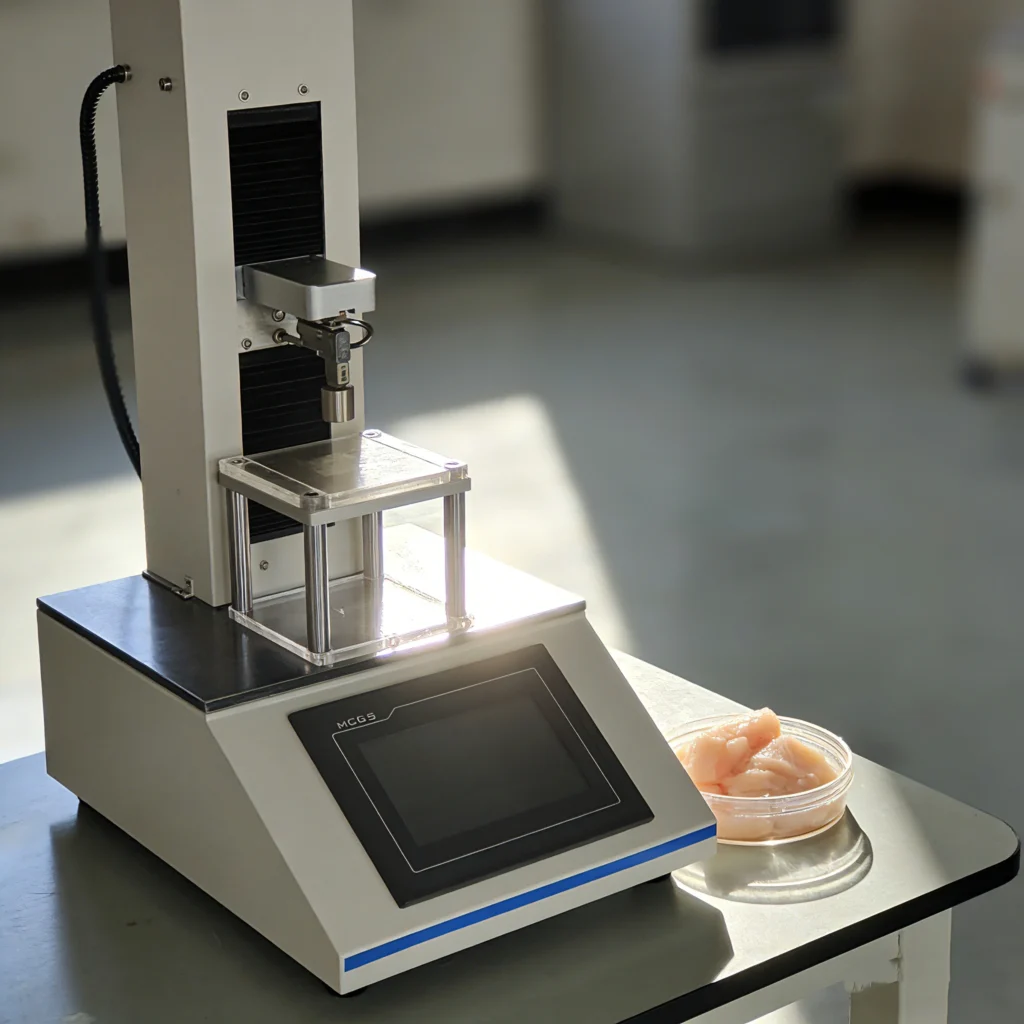
Reliable Texture Measurements Improve Product Quality
Why Fish Texture Analysis Matters
Understanding texture is especially important for gel-based products like surimi or fish paste, where gel strength and elasticity are critical for final product quality.
Accurate fish texture analysis is essential for:
-
Quality Control: Ensures consistent firmness, cohesiveness, and gel strength across batches of fresh or processed fish.
-
Product Development: Guides formulation and processing adjustments for surimi, fish fillets, and ready-to-eat seafood products.
-
Compliance: Meets industry and safety standards for texture, quality, and shelf-life stability.
-
Consumer Satisfaction: Helps maintain preferred mouthfeel, chewiness, and product consistency.
Industries and Applications of Fish Texture Analysis
Seafood Processing
Guarantees uniform firmness, chewiness, and cohesiveness in fillets, surimi, fish cakes, and other processed seafood products.
R&D and Product Development
Optimizes product formulations, processing conditions, and gel-based textures using Texture Profile Analysis (TPA) and gel strength testing.
Specialty Seafood Products
Supports testing of alternative protein seafood products, fish sausages, and surimi-based snacks, where TPA texture and gel strength are critical quality indicators.
Frozen & Ready-to-Seafood
Supports testing of alternative protein seafood products, fish sausages, and surimi-based snacks, where TPA texture and gel strength are critical quality indicators.
Main Functions and Advantages of Texture Analyzers
Modern TEX series analyzers from Cell Instruments combine automation, precision, and user-friendly operation:
- One-button operation for full automation and simplified testing
- High-accuracy load sensors with precision control
- No-impact pressing system prevents sample deformation or damage
- 32-bit CPU for fast, accurate data processing
- Touchscreen interface for intuitive operation and real-time display
- Integrated micro-printer and software for automatic data capture
- Multiple probe options for TPA, shear, gel strength, and tenderness tests
Key Advantages:
01
Consistency
Accurate, repeatable measurements of fish texture, including firmness, chewiness, and cohesiveness.
02
Speed
Automated testing reduces operator error and increases throughput in QC labs and processing lines.
03
Adaptability
Compatible with fresh, frozen, and processed fish products; supports multiple test methods.
These features combine to deliver industry-leading performance in surface smoothness test applications.
Prefix describing what your business does will be here
Brief Description of Fish Texture Analysis Methods
Fish texture analysis employs several standardized methods to evaluate product quality and sensory attributes:
-
Texture Profile Analysis (TPA) – Simulates chewing to measure hardness, cohesiveness, springiness, and chewiness.
-
Gel Strength Testing – Measures firmness of surimi, fish paste, or gel-based seafood using a gel strength tester.
-
Shear Force Analysis – Determines the force required to cut fish fibers, assessing tenderness.
-
Cutting Force Measurement – Quantifies resistance to slicing for fillets, sausages, or minced fish.
-
Tenderness Testing – Uses Kramer shear cells or specialized probes to quantify perceived tenderness.
Standards compliance ensures results meet international QC and R&D expectations.
Texture Analyzer
Technical Specifications

| Parameter | TEX-01 / TEX-01Pro | TEX-02 |
|---|---|---|
| Test Range | 50 kg | 20 kg |
| Speed | 1–500 mm/min | 1–500 mm/min |
| Stroke | 250 mm | 110 mm |
| Key Methods | TEX-01: Compression, Gel Strength, Hardness & Fracturability, Tensile, Hold to Load, Bloom Test, Kramer Shear, TendernessTEX-01Pro (additional): Full Texture Profile Analysis (TPA, “two-bite” test) | Compression, Gel Strength, Hardness & Fracturability, Tensile, Hold to Load, Bloom Test, Kramer Shear, |
| Power | AC 110–220V | AC 110–220V |
| Dimensions (L×W×H mm) | 410 × 360 × 820 | 450 × 300 × 360 |
Why Choose Cell Instruments?
-
Proven Quality: Decades of experience in food, pharmaceutical, and packaging industries.
-
Customization Service: Solutions tailored for fish and seafood testing.
-
Expert Support: Training, pre-sale consultation, and responsive after-sales service.
-
Reliable Delivery: Export-ready systems with multilingual documentation and global compliance.
Why Fish Texture Testing Is Essential
Understanding the texture of fish is crucial for maintaining product quality, improving mouthfeel, and ensuring consistent consumer satisfaction. Proper fish texture analysis helps seafood manufacturers:
-
Optimize processing and formulation
-
Ensure batch-to-batch consistency
-
Reduce product complaints and returns
-
Maintain regulatory compliance for sensory and mechanical properties
Frequently Asked Questions about Texture Analyzer
What is fish texture analysis?
Quantifies firmness, cohesiveness, springiness, chewiness, and tenderness of fish and seafood products.
Which fish products can be tested?
Fresh fillets, frozen fish, surimi, fish sticks, minced or processed seafood.
What testing methods are available?
TPA, gel strength, shear force, cutting force, and tenderness tests.
Can TEX analyzers be customized?
Yes, probes, clamps, and software can be tailored to specific fish products or QC needs.